Showing posts with label 1962. Show all posts

Friday, August 24, 2018

Teddy Buckner & His All Stars (featuring Caughey Roberts on clarinet) * Midnight in Moscow * GNP Crescendo Records (GNP 68) * 1962

Side One

Midnight in Moscow
Avalon
Lonesome Road
Fidgety Feet
Ballin' the Jack
Somebody Stole My Gal

Side Two

Bill Bailey
Jada
My Gal Sal 
South
Sister Kate
My Blue Heaven


Teddy Buckner, trumpet
Caughey Roberts, clarinet (soprano sax on 'My Gal Sal')
Willie Woodman, trombone
Chester Lane, Piano
Art Edwards, Bass
Jesse Sailes, Drums


From the late 1940's through the early '60s there was such cross-pollination between the Trad Jazz scenes in the UK and United States, it becomes difficult to determine who was really taking the lead at various times. While Ken Colyer and Chris Barber lead the charge on the London scene at the beginning of the era, emulating New Orleans style bands especially, by the late '50s Acker Bilk and Kenny Ball had reached the top of the pop charts in both Britain and the US and were influencing American set lists and albums.

That the students had become at least in some ways the masters can be born  out by the caliber of artists covering their tunes. Acker Bilk's 'Stranger on the Shore', released in 1961,  became a number one hit in the US, subsequently covered by Pete Fountain on his 1963 Coral record, Plenty of Pete. Likewise, Kenny Ball's greatest hit from 1961 was a Russian song originally entitled "Leningrad Nights," renamed "Midnight in Moscow." Ball's version hit the number two spot on in both the UK and the US, inspiring Los Angeles-based trad jazz trumpeter Teddy Buckner to cover the tune, releasing an album of the same name in 1962.

Teddy Buckner was a fine Trad trumpeter in the style of Louis Armstrong and Bunk Johnson, who served his musical apprenticeship in the Kid Ory Band during the first wave of West Coast Trad revivals. Among jazz clarinetists, he is probably best known for the recordings his band did with Edmond Hall. This 1962 release, however, and the clarinetist who played on it, ought to be remembered as well.

In the history of jazz, there are many local legends who, for some reason or another, never capture the imagination of the press or public. It can be difficult to figure out why, but it's simply a fact that some players turn into celebrities while others labor in relative obscurity--sometimes possessing the same or greater levels of talent and ability as their more famous counterparts. One of the great gifts of recorded history, however, is our ability to find these underappreciated players and shine some light on their important music making, even decades after they have passed away. Caughey Roberts (first name pronounced 'Couch-ie') is one of those players deserving far wider fame and respect in the history of jazz clarinet. This album is eloquent proof.

First of all, he is the main featured soloist on this album--taking at least as much solo time as the bandleader, Buckner. His sound is comparable to Edmond Hall's, except (and may the righteous legions of Edmond Hall admirers forgive me for saying it) he tends to play better in tune, at least on this album. His fire is also a bit like the mighty Hall, but reminds me most of another neglected flame-thrower of the early '60s: Doug Richford, whose clarinet work with Bob Wallis's Storyville Jazz Men ought to be legendary. In all, I think these men tend to create a core of clarinet style characterized by their use of persistent growl texture (almost a permanent part of their tones), unique and characteristic blues shadings, and aggressive style. I love this 'school' of Trad Clarinet and suggest players listen to all three of them to gain perspective on the scope the style suggests. Too often Edmond Hall is considered a unique loner in the world of jazz clarinet, when in fact he was part of a movement of playing, and perhaps the originator of a style.

All the cuts on this album are worth listening to--Caughey plays clarinet except on 'My Gal Sal', where he shows his skill on soprano sax, strongly in the tradition of Sidney Bechet. One moment of interest comes on 'Bill Bailey', where he hits and holds an altissimo A (concert G). Because this sort of range is rare among Trad Jazz clarinetists of that era, it seems even higher than usual, becoming quite a dramatic statement.

Those wanting to know more about this remarkable clarinetist are encouraged to read Peter Vacher's obituary of this great musician from August of 1991.     
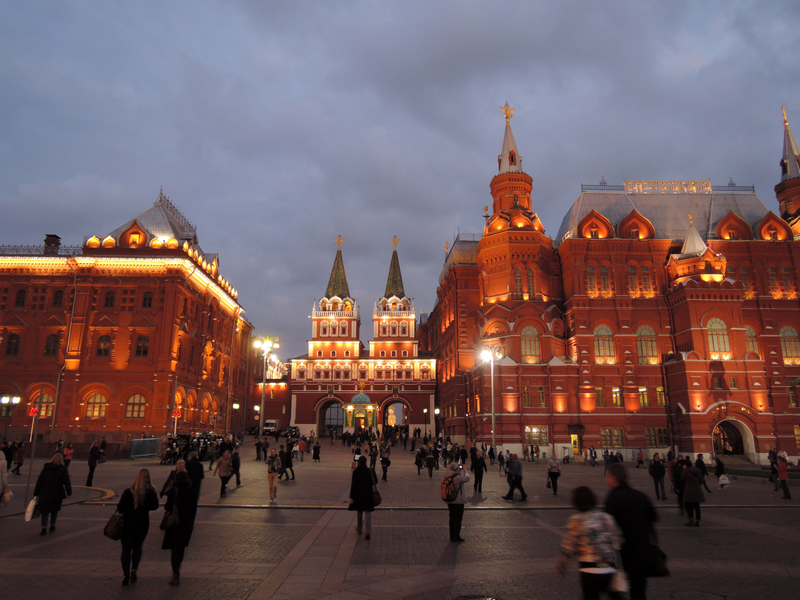


"Moscow Nights"


Friday, July 20, 2018

Presenting Pete Fountain With Al Hirt * Bourbon Street * Coral Records (CRL 757389) * 1962


Side A

Farewell Blues (*)
St. James Infirmary
March of the Bob Cats (*)
March Through the Streets of Their City

Side B

At the Jazz Band Ball (*)
Blues on Bourbon Street (**)
Jazz Me Blues (*)
Lazy River

Pete Fountain, clarinet
Al Hirt, trumpet (*)
Eddie Miller, tenor sax (*)
Abe Lincoln, trombone (*)
Stan Wrightsman, piano
Bobby Gibbons, guitar
Morty Corb, bass
Ray Bauduc, drums (*)
Jack Sperling, drums 
Godfrey Hirsch, vibes (**)
Dave West, piano (**)
Lowell Miller,  bass (**)
Paul Guma, guitar (**)


Bourbon Street is the companion piece to another Coral record released in the same year of 1962: Pete Fountain & Al Hirt: The New Orleans Scene. It's laid out identically to The New Orleans Scene, alternating between a full New Orleans band featuring both Fountain and Hirt, and Pete's smaller night club gigging ensemble of the early '60s. It's interesting that Coral didn't release all the Al Hirt sides on one of the discs, and all of the smaller groups on another, as the small combo tunes seem to me clearly the stronger ones on The New Orleans Scene. The level of excellence on this Bourbon Street album is consistent, though, with the full Dixieland contingent swinging hard and well.

Highlights of this album include excellent versions of 'Farewell Blues' and 'At the Jazz Band Ball' -- warhorses from the repertoires of the New Orleans Rhythm Kings and the Original Dixieland Jass Band, too often covered by bands with an exaggerated nostalgia even in the late '50s and early '60s. Hirt and Fountain tear into them like they were written yesterday, with a freshness and that subtle insistence common to all great music--that sense that the performers have a need to play the music. Perhaps only Eddie Condon's bands played these numbers as well, though I'd give the nod to Hirt and Fountain, for the simple reason that Condon never recorded them with a clarinetist so strong as Pete.

Pete's small combo recording of 'St James Infirmary' is, to my mind, one of the finest versions of the tune recorded. The mood is thoroughly 'modern'...not meaning that the harmonies or melodic style were influenced by modern jazz, particularly, but that the sound and space is once again entirely without nostalgia--a mournful strength runs through Pete's classic solo, with the ensemble murmuring assent. This is one of those performances that ought to make all clarinetists pause and think about the repertoire for the clarinet, even in terms of classical music. How many composers could write such a perfect statement? Such a heartfelt movement of music? Pete carves his own musical path, with assurance and maturity here. To my mind, this music won't ever go out of style any more than Brahms will.

On Side B we're treated to a Fountain/Dant original, 'Blues on Bourbon Street', which incorporates wisps of 'The Saints' and seems an after hours gamble through the Quarter in the wee hours after closing time. 'Jazz Me Blues' reinforces the authority of the Hirt/Fountain band to interpret the earliest jazz tunes, and Pete continues his seemingly endless variations on Sidney Arodin's 'Lazy River.'

Leonard Feather's liner notes are of interest to musicology, highlighting what probably ought to be better understood--the importance of the two poles of jazz in mid-century--52nd Street and Bourbon Street.

This is an essential album.


Image result for public domain photo bourbon street


Thursday, July 19, 2018

Pete Fountain * Swing Low, Sweet Clarinet * Coral Records (CRL 57394) * 1962

Side A

Dis Ol' Train
Sing You Sinners
Nobody Knows the Trouble I've Seen
Swing Low, Sweet Chariot
Down By the Riverside
Let Me Walk Closer to Thee

Side B

Yes Indeed
Swing Low, Sweet Clarinet
If I Go to the Promised Land
I Talk to the King (Fountain, Dant, & Wrightsman)
Sometimes I Feel Like a Motherless Child
Joshua Fit the Battle of Jericho

Pete Fountain * Clarinet
Dick Cathcart * Trumpet
Plas Johnson * Tenor Sax
Godfrey Hirsch * Vibes
Stanley Wrightsman * Piano
Bobby Gibbons * Guitar
Morty Corb * Bass
Jack Sperling * Drums

Gwen Johnson * soprano voice
The Jubilee Singers * Vocals/Chorus

In many ways, this album feels like a precursor to Pat Metheny's Americana inspired projects: they seem to explore the juncture between 'jazz' and other 'roots' music, investigating what broader orchestration might be used to express the type of optimism and warmth of the American heartland--specifically the Midwestern America of the 1950s and 60s. To some, these projects are anathema: they're branded as 'commercial,' 'illegitimate', a straying from purist jazz, whatever that might be.   

The musical situation is complicated by the reality that this was indeed a commercial venture. Every professionally marketed recording is, of course--but in particular these forays of Pete Fountain and Bud Dant were certainly made with the hopes of capturing the mood of a large percentage of the listening public. The present album was no exception--it included a then recent Ray Charles hit--'Yes Indeed'--even hinting in Sam Rowland's liner notes that a "single of this title would be a smash hit!"

Growing up in the Northeast, slightly past the era when this album was produced, I initially found this album outside of my tastes--in an almost identical manner that I find Metheny tunes like 'Every Summer Night' difficult to enter emotionally. There seemed something a little too bubbly and optimistic about it for me. Living in the Midwest for the last 23 years, however, has changed my perception of this music in a good way. Honestly, I never really understood the attraction to the Nashville or Memphis sounds (which influenced Pete Fountain from an early age, and found their way into many of his records) until spending years among the landscapes and people of Southern Indiana and Kentucky (not quite Tennessee, but I guess close enough to 'get it'). I found that often what we from the coasts are dismissive of--what we call unsophisticated or naive--is really heartfelt gratitude, and a unique expression of beauty not to be found in other music. Not all of Pete's records in this style strike me as having that level of beauty, but this one does--to me it's one of the best examples of this type of Americana.

The opening number-- 'Dis Ol' Train'--hits with heartland ambiance full-force, Jubilee Singers and all. If you wonder whether this album is for you, it's front loaded to help decide! Even when I was most resisted to the aesthetic, I had to admit that when Pete and Jack Sperling broke in, I was amazed at the pure joy--it's an absolutely breathtaking moment of clarinet, drums, chorus--and if we're honest, what moment is like it in music history? It's kind of, well, strangely...unique. The rest of the album unfolds with similar interest.

The title track is a cover of an earlier record by the English classical soloist Reginald Kell. When I met him in 1990, Pete told me that of all the classical clarinetists of the past, he admired Kell the most, and didn't listen to many others. He preferred Kell for his big sound and expressiveness, which he felt more akin to New Orleans jazz players. The concept seems to have been to build an album around 'Swing Low, Sweet Clarinet', the title of which was an obvious reference to the spiritual 'Swing Low, Sweet Chariot' (also included). All of the other numbers are spirituals, some in small combo setting, some with big band, some with the whole contingent including the Jubilee Singers. Highlights for me are 'Dis Ol' Train' for reasons mentioned above, 'Sing You Sinners' (Pete with Quintet), and a 5/4 clarinet and Big Band version of 'Sometimes I Feel Like a Motherless Child.' As with all of these Fountain/Dant concept albums, the pacing, symbolism, and choice of tunes is first rate, the album flowing seamlessly from beginning to end.

Perhaps the final chapter in my long, slow, awakening to this type of music came when I was playing a duo gig a few years back with a pianist I'd never met before the job itself. We were hired to play New Orleans style music, and he was recommended to me. In between sets we talked about our favorite recordings and he brought up this album. In fact, he said with great sincerity and emotion that it was his favorite album of all time. I was shocked--this couldn't be true, could it? A professional jazz pianist preferring this over everything else? But it was. He even had a digitally remastered CD of it, the likes of which I'd never seen or heard. His quiet devotion to this album made me take it more seriously, and I've listened to it with more open ears, mind, and heart since.

So there you have it. Is this 'jazz'? Well, sure. Some of it. Is it likely to please a jazz audience? That depends on how receptive the listener is to this type of Americana. In my opinion, we'd better be open to this sort of expression, though, and perhaps try to tap into it creatively ourselves. To push it away only diminishes our musical world.


Detail from my copy of the original LP, showing the stamp of WHLD in Niagara Falls.
There's something nostalgic about imagining this LP played over the airwaves.
(Eric Seddon Collection)


Wednesday, July 18, 2018

Pete Fountain & Al Hirt * The New Orleans Scene * Coral Records (CRL 57419) * 1962

Side A

Panama 
St Louis Blues (*)
All the Wrongs You've Done to Me
Lonesome Road (*)

Side B

I Used to Love You
I've Found a New Baby (*)
It's a Long Way to Tipperary
Might Like the Blues (*)

Pete Fountain * Clarinet
Al Hirt * Trumpet
Jack Delaney * Trombone
Roy Zimmerman * Piano
Joe Capraro * Bass
Arthur (Monk) Hazel * Drums

(*) Stan Wrightsman * Piano
(*) Bobby Gibbons * Guitar
(*) Morty Corb * Bass
(*) Jack Sperling * Drums


This was one of the first Pete Fountain albums I heard as a kid, and certainly my first exposure to Pete in a quartet setting. The quartet tracks are pretty much responsible for my addiction to the entire New Orleans tradition of clarinet--and I'm happy to say I've never completely gotten over them. The New Orleans Scene was also my first introduction to the repertoire presented--including 'St Louis Blues', which Pete plays in the key of F rather than the more standard key of G. Back in the dark days of the 1980s, before the internet, the only 'Real Book' out there was the pirated version, and most of the tunes were bop and early fusion. To my trad-oriented mind it was filled with numbers of very little interest, but because it was the standard gig book, I did my best with it. The only way a kid like me could really learn the tunes that Pete played was to transcribe them by ear and hope to run into a band of older players who knew them. As it turns out, that method is almost as old as jazz itself, and certainly an indispensable part of a jazz musician's learning process. I didn't know that then--just desperately felt the need to play this music (which, as it turns out, is also an indispensable part of being a jazz musician, so in retrospect I was following the right path).

Anyhow, I finally did run into that band of older players who knew 'St Louis Blues', getting my chance to sit in with them. That group was the Galvanized Jazz Band, and a quick internet search reveals this fine ensemble is still gigging regularly in Connecticut. To my ear, they were a real top notch Dixieland ensemble. I was about seventeen year old, and one of the older cornet players who used to play with them occasionally heard about me. He said I should get some experience playing 'out,' offering to take me the two hours or so of highway driving to get there. So we plunged onto the highway one Fall evening, in the type of relentless lashing rain that people from Connecticut know so well. The band was playing along Long Island Sound somewhere, at one of the many seafood bars--in retrospect as perfect setting you can get in the North for New Orleans style jazz. When I finally got my chance to call a tune, I figured I'd better call something I could rip on, to really impress the guys, and one of the only Real Book tunes I'd liked was John Coltrane's 'Mr. P.C.'

"Do you play any Trane?" I asked.

"No," was the annoyed response, and a couple of the band members rolled their eyes. My mind raced.

"How about St Louis Blues?"

"Now you're talking!"

I counted off and dug into the head--in the wrong key! I was playing Pete's version, rather than the standard! The guys were so good, though, we stopped and restarted--and they all transposed seamlessly behind me. The clarinetist for the band that night was very encouraging--I'll never forget our conversation about the music. Pete's recording of this came up--he probably realized it was from this album that I'd gotten the tune.

Some albums are so full of memories of time and place, so loaded with nostalgia, that they become impossible to separate from our lives. Or maybe we don't want to separate them--realizing that if we pull this album out to dissect it, our lives will start to fray too much in those spots. I'm that way with The New Orleans Scene--it was part of the sustaining soundtrack to my life as a teen, and a more or less constant companion afterwards. If I grudgingly attempt to look at it objectively for a moment, the numbers with Al Hirt and the larger ensemble never particularly grabbed my attention--though their version of 'Panama' is still the primordial template for the tune in my mind, from that first exposure. Honestly, there are other examples of Pete in a larger New Orleans ensemble setting that seem to have more spirit and verve (particularly earlier recordings from the mid 1950s). I'd also have to admit some of his other recordings of 'I've Found a New Baby' might even outstrip this brilliant studio recording--the live version on At the Bateau Lounge is certainly in the running. Still, these eight tunes are a very solid collection some of the great standards. Pete's playing on 'St. Louis Blues,' the aforementioned 'I've Found a New Baby,' and 'The Lonesome Road' were so powerful that they hooked me for life, and probably altered my trajectory from that of a New York kid wanting to play modern jazz and swing, to a clarinetist looking south towards New Orleans for my inspiration. 

So I recommend this short, patchwork album to everyone, with the caveat that I can't objectively listen to it. It's too much of an old friend. And for all you kids out there transcribing--by all means, get after Pete's playing as much as you can. But remember most bands play 'St Louis Blues' in G. 


Pete Fountain Mardi Gras Medallion
(Eric Seddon Collection)